Why surgical simulation training is more important than ever - CSM’s take.
It is widely recognised that there is an increasing scarcity of cadavers available for medical education and junior surgical training. As the number of enrolled medical students in the UK continues to grow year on year, and as speciality training places increase, more limited operating theatre exposure for trainees has become increasingly apparent. Both bedside procedures (such as suturing, skin stapling and wound cleaning) and in-theatre surgery (laparoscopic, robotic and open) rely on years of extensive training and repetition to develop competence and confidence.
The use of medical meat has long been a common alternative for procedural practice, but this approach presents ethical, hygiene, religious and sustainability challenges, making it an increasingly less practical solution for modern medical education.
As cadaveric and prosection-based learning becomes scarcer in medical schools worldwide, the gap between learning theory and treating real patients continues to widen. This shift has accelerated the adoption of simulation-based education, allowing students and trainees to develop practical skills in a safe, controlled environment before performing procedures on patients.
Whilst digital forms of learning, such as online e-learning and augmented reality, have an important role in simulation training, there remains little replacement for hands-on, tactile learning opportunities. Realistic silicone skin pads and artificial organ models enable repeated practice without patient risk, helping learners refine both technical ability and procedural confidence before entering the clinical environment.
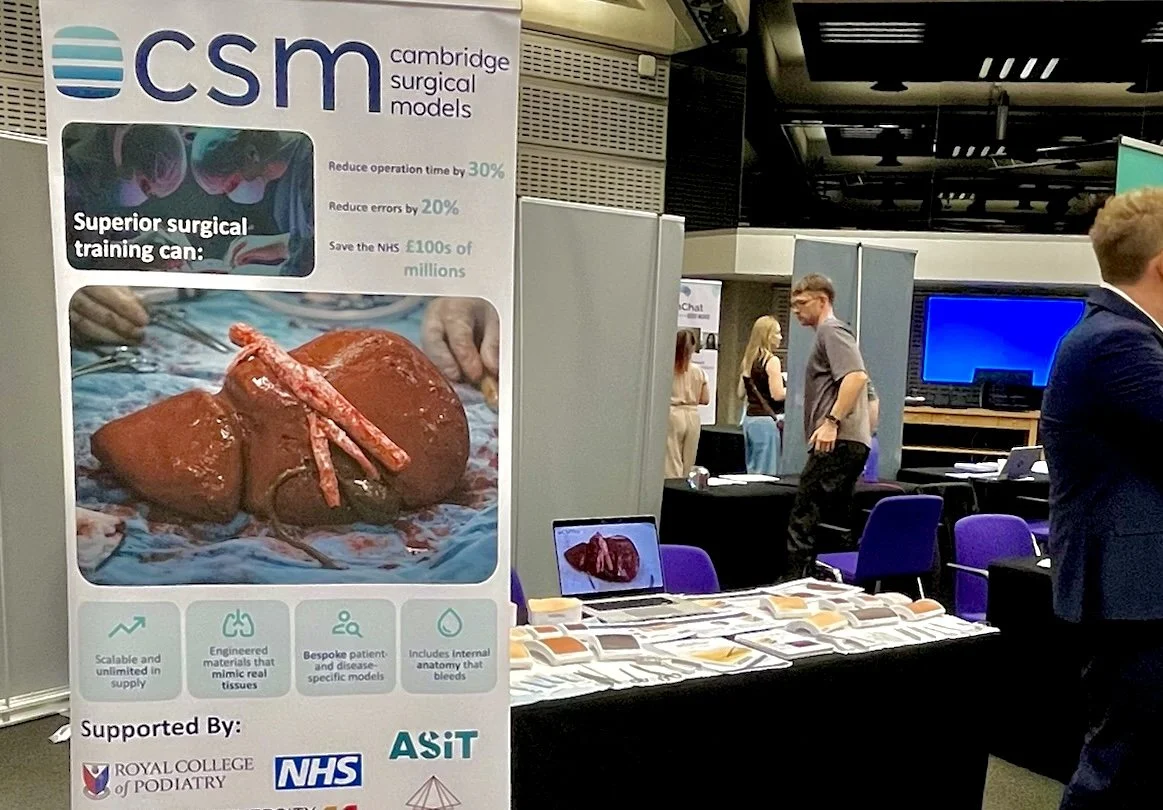
Cambridge Surgical Models is proud to be part of this evolution in medical education. Our next-generation, high-fidelity surgical training tools—including skin pads and organ models—have been mechanically tested to replicate the characteristics of real human tissue and are designed with anatomical accuracy in mind. Our skin pads have been widely regarded as some of the most realistic available, especially when compared with foam and other generic training models that students and trainees have traditionally used. By engineering and manufacturing realistic, reusable, and accessible simulation tools, Cambridge Surgical Models is helping bridge the gap between theoretical learning and real-world surgical practice.